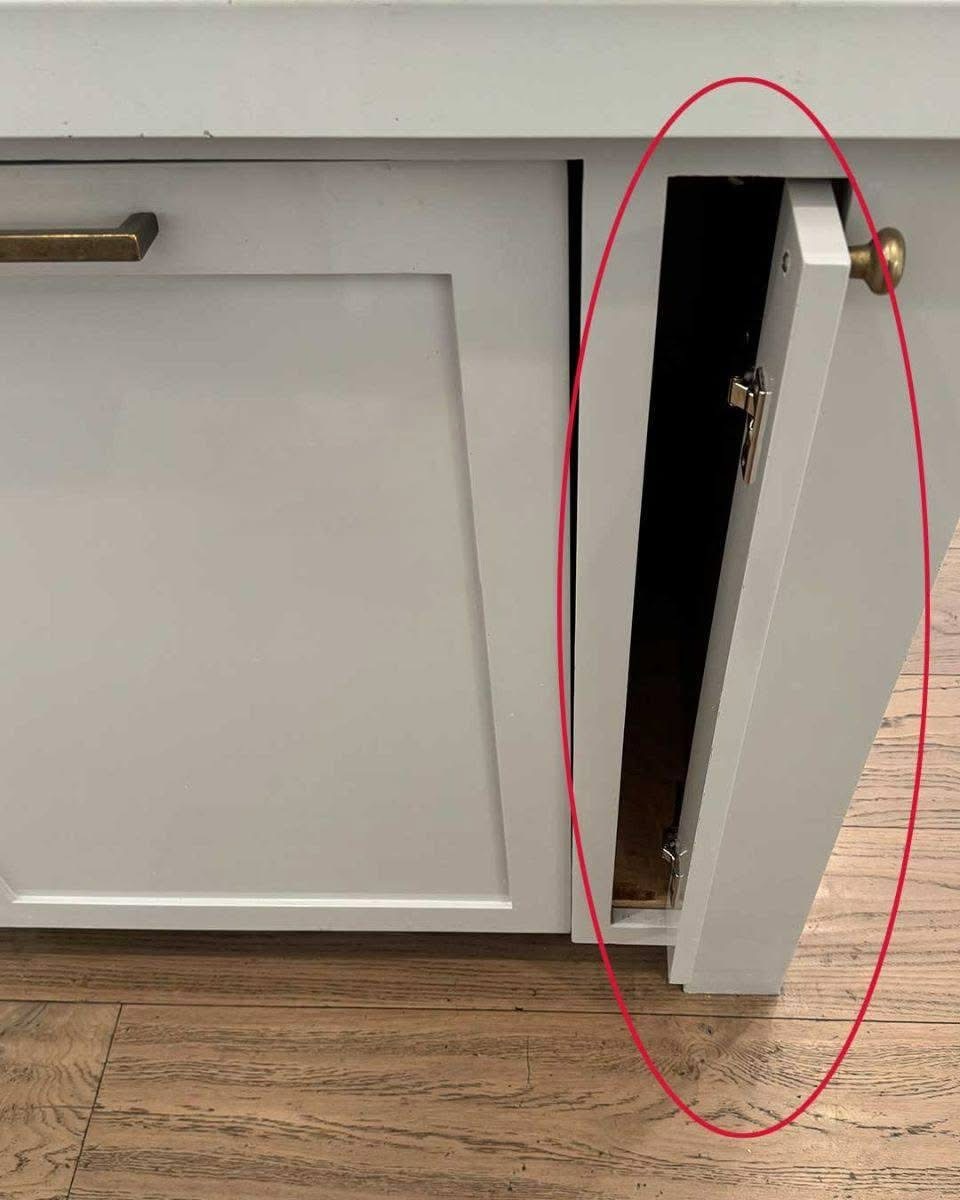

In contemporary residential design, the kitchen has become one of the most scrutinized and carefully planned spaces in the home. No longer viewed merely as a utilitarian room for food preparation, it is now a social hub, a visual centerpiece, and a reflection of personal taste. However, this heightened aesthetic ambition often collides with a practical and persistent challenge: limited space. Even in well-planned kitchens, awkward gaps frequently emerge—small voids measuring anywhere between three and six inches that appear between major appliances and fixed architectural elements such as walls or base cabinets. Traditionally, these narrow gaps have been regarded as unavoidable flaws in layout planning, offering little more than a resting place for dust, crumbs, or fallen utensils. Yet, advances in cabinet design and storage engineering have fundamentally changed how these overlooked spaces are perceived and used.
One of the most innovative responses to this challenge is the narrow cabinet filler pull-out. What was once considered wasted space has been reimagined as an opportunity for highly efficient storage. Rather than allowing these slim areas to remain dormant, designers now transform them into vertical storage systems that add both functionality and refinement to the kitchen. These pull-out units exemplify a broader shift in interior design philosophy—one that values intelligent problem-solving and spatial efficiency as much as visual appeal.
At first glance, a narrow filler pull-out cabinet is almost invisible. When closed, it presents itself as a simple vertical panel, carefully matched to the surrounding cabinetry in color, finish, and detailing. It does not disrupt the visual rhythm of the kitchen or draw attention to itself. This understated appearance is intentional. Modern kitchens increasingly favor clean lines and uninterrupted surfaces, and the ability of a pull-out unit to blend seamlessly into its surroundings is one of its greatest strengths. However, this visual modesty conceals a highly functional interior that is revealed with a gentle pull.
Once extended, the cabinet glides smoothly forward on precision-engineered runners, exposing a vertically organized storage system. This transformation—from an unremarkable sliver of cabinetry into a fully accessible storage column—highlights the ingenuity behind modern kitchen engineering. These units are not simply narrow boxes attached to sliding hardware; they are carefully designed systems that maximize every possible inch of space in a room that is often prone to clutter and inefficiency.
The engineering challenges involved in creating such slim storage units are significant. Because filler pull-outs are designed to function within extremely narrow widths, stability and balance are critical considerations. Inferior construction would result in cabinets that wobble, stick, or fail under even modest weight. To counter this, high-quality pull-out systems rely on heavy-duty, full-extension ball-bearing slides that provide both strength and smooth motion. These runners allow the cabinet to extend fully without tipping, even when loaded with heavy items such as glass bottles, canned goods, or cooking oils.
The internal configuration of these cabinets is where their true versatility becomes evident. Many designs incorporate adjustable shelving, metal rails, or modular compartments that can be repositioned to suit the user’s specific storage needs. This adaptability allows homeowners to personalize the cabinet’s function rather than forcing their belongings to conform to a fixed layout. For some users, the pull-out becomes an organized spice collection, with jars arranged vertically for easy identification. For others, it serves as a storage solution for tall or awkward items such as baking trays, cutting boards, or foil rolls—objects that often cause frustration when stored in conventional cabinets.
Beyond storage capacity, narrow pull-out cabinets offer a substantial improvement in kitchen ergonomics. Traditional base cabinets, especially deep ones, often suffer from poor accessibility. Items placed at the back are difficult to see and reach, leading to wasted time and physical strain. Small but frequently used ingredients—such as extracts, spices, or specialty condiments—are particularly susceptible to being forgotten in these dark recesses. Over time, this results in duplicate purchases, expired products, and unnecessary clutter.
Vertical pull-out cabinets address this problem by presenting their entire contents in a single, unobstructed view. When the cabinet is opened, everything it contains is immediately visible and within arm’s reach. This eliminates the need to crouch, kneel, or rummage through stacked items. The contents are naturally illuminated by the kitchen’s ambient lighting, further enhancing visibility. From an ergonomic perspective, this design significantly reduces physical effort and streamlines everyday cooking tasks.
Despite their clear advantages, narrow filler pull-outs are sometimes dismissed as impractical or purely decorative. Critics often argue that such a small width cannot possibly offer meaningful storage. This perception, however, stems from a misunderstanding of spatial volume. While three or four inches may sound insignificant when considered horizontally, the equation changes when that width is extended vertically and depth-wise across the full dimensions of a base cabinet. The resulting storage capacity is often greater than expected, particularly for smaller items that would otherwise occupy valuable space in larger cabinets.
In fact, one of the most compelling benefits of filler pull-outs is their indirect impact on overall kitchen organization. By relocating small, frequently used items into these specialized units, larger cabinets are freed from clutter. This allows them to be used more effectively for their intended purpose: storing bulky cookware, countertop appliances, and large serving dishes. When each item has a designated and accessible place, the kitchen as a whole feels more spacious, orderly, and efficient.
Another common misconception concerns durability and maintenance. Early generations of pull-out storage systems were sometimes plagued by flimsy construction and unreliable hardware, leading to skepticism among homeowners. However, contemporary pull-out cabinets bear little resemblance to these earlier iterations. Advances in materials and manufacturing have resulted in runners that are not only stronger but also quieter and smoother. Many systems now incorporate soft-close mechanisms that prevent slamming, protect fragile items, and contribute to a sense of refinement.
Maintenance requirements for modern pull-out cabinets are minimal. Routine cleaning and occasional inspection of the sliding hardware are typically sufficient to ensure long-term performance. Additionally, while these cabinets are most easily integrated during a full kitchen renovation, they are no longer limited to new builds. The availability of aftermarket pull-out kits has made it possible to retrofit existing kitchens, provided there is a removable filler strip or unused gap. This accessibility has broadened their appeal and made efficient storage solutions available to a wider audience.
The growing popularity of narrow pull-out cabinets must also be understood within the broader context of contemporary interior design trends. Modern design increasingly emphasizes minimalism, multifunctionality, and hidden storage. As living spaces—particularly in urban environments—continue to shrink, the ability to maximize every inch has become a necessity rather than a luxury. Concepts once associated with tiny homes and micro-apartments are now influencing mainstream residential design, including suburban houses and high-end renovations.
In this context, filler pull-out cabinets align perfectly with the principle of “wasting nothing.” They transform residual spaces into purposeful features without compromising aesthetics. Moreover, their placement can be strategically optimized to enhance workflow within the kitchen. The concept of the kitchen “work triangle”—the relationship between the sink, stove, and refrigerator—remains a foundational principle of kitchen design. Narrow pull-outs can be positioned to support this workflow by storing relevant items exactly where they are needed.
For example, a pull-out cabinet installed next to the stove can house cooking oils, spices, and utensils, minimizing movement during meal preparation. Similarly, a unit placed near the sink can store cleaning supplies, dish towels, or trash bags, keeping these necessities close at hand while maintaining a tidy appearance. By reducing unnecessary steps and simplifying access, these cabinets contribute to a smoother, more intuitive cooking experience.
Ultimately, the significance of narrow cabinet filler pull-outs lies not in their size but in their impact. They demonstrate that effective design is not solely about grand gestures or expansive spaces; it is about addressing the small inefficiencies that accumulate into daily frustration. By converting leftover gaps into highly functional storage, these cabinets elevate the overall performance of the kitchen.
For homeowners who prioritize organization, efficiency, and visual harmony, narrow pull-out cabinets are far from indulgent accessories. They represent a thoughtful investment in daily comfort and usability. Each time the cabinet slides open effortlessly to reveal an orderly array of essentials, it reinforces the idea that intelligent design enhances quality of life in subtle yet meaningful ways.
In a well-designed kitchen, nothing is accidental. Every inch serves a purpose, and every element contributes to a cohesive whole. Narrow filler pull-out cabinets embody this philosophy by proving that even the smallest spaces can deliver significant value when approached with creativity and precision. When these overlooked gaps are thoughtfully addressed, the kitchen transforms from a space of compromise into one of balance and efficiency—a finely tuned environment that supports both practical needs and aesthetic aspirations.