
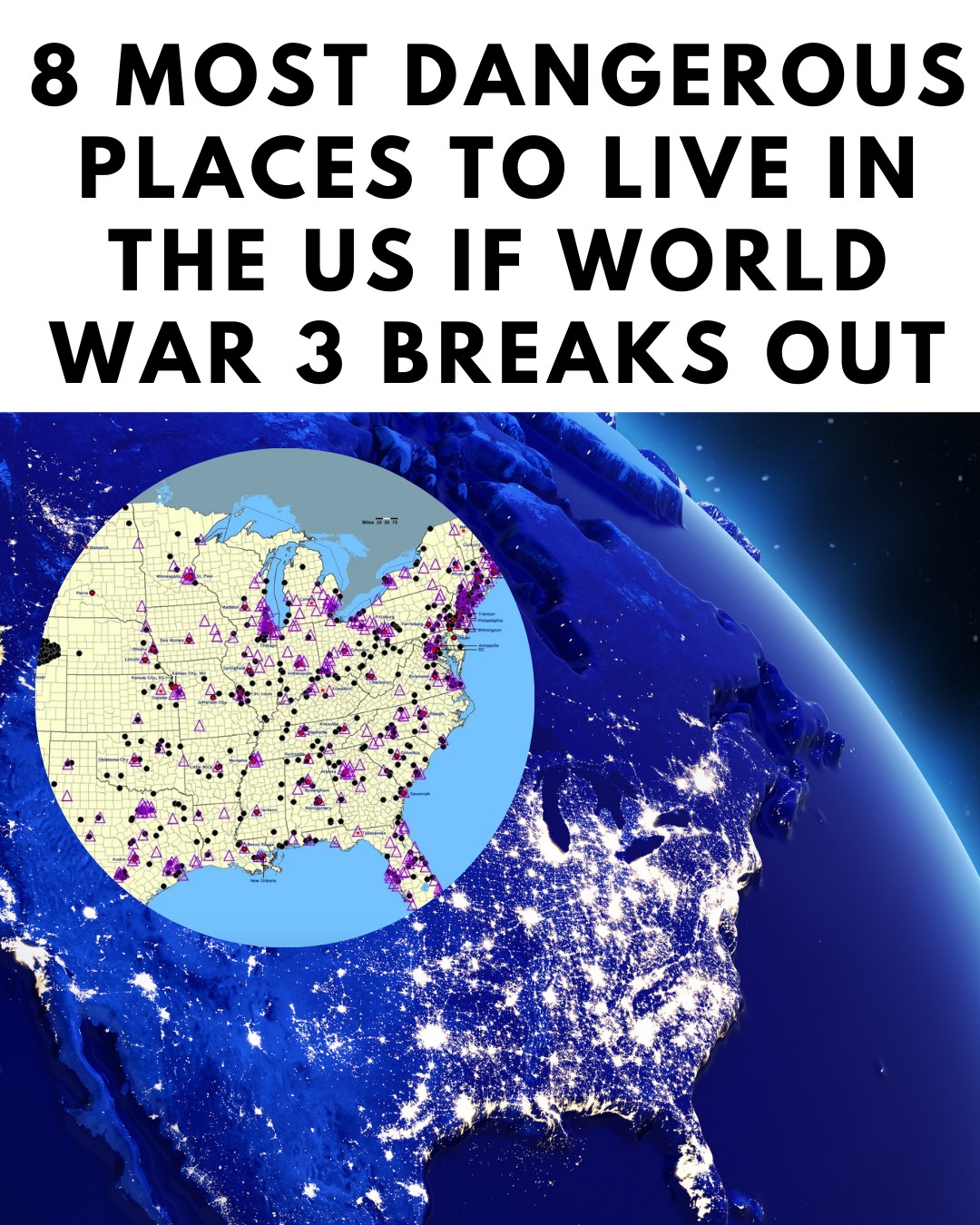
Concerns regarding the potential outbreak of a third world war have intensified in recent months, particularly as geopolitical tensions escalate in multiple regions. In the aftermath of military strikes involving the United States, Israel, and Iran, analysts and observers have renewed discussions about the likelihood of a broader global conflict.
Although speculation about another world war has persisted for decades, current geopolitical uncertainty has heightened public unease. A primary concern associated with a potential large-scale conflict is the risk of nuclear weapons being employed.
Strategic Considerations for Nuclear Target Selection
If nuclear weapons were deployed against the United States, target selection would likely extend beyond maximizing casualties. Military strategists typically evaluate a range of objectives when determining potential targets.
In numerous scenarios, striking strategic defense infrastructure may be considered more effective. For the United States, this would likely involve targeting intercontinental ballistic missile (ICBM) silos, which are predominantly situated in the central region of the country.
Disabling these missile systems could significantly diminish the U.S. military’s capacity to execute a retaliatory response.

Photo: The origins of this alarming map trace back to a CBS article from 2015, citing sources such as FEMA, Medicine and Global Survival, and the National Resources Defense Council (Image: CBS News)
Areas That Could Face the Highest Risk
Research and simulations have attempted to estimate which regions could experience the most severe consequences in such a scenario.
A fallout map created by Scientific American illustrated how radiation could spread if nuclear weapons were used against missile fields located in the American heartland, particularly in states such as Colorado, Wyoming, Nebraska, Montana, and North Dakota.
A Newsweek analysis published in 2024 examined this map and identified several states that could face the greatest danger from radioactive fallout.
According to the report, these eight states could experience the highest radiation exposure risks if missile silo targets were attacked:
Montana
Wyoming
Colorado
Nebraska
South Dakota
North Dakota
Iowa
Minnesota

States Considered Less Exposed
On the other hand, some regions were considered relatively safer due to their distance from major strategic military targets.
The analysis listed several states across the eastern United States and parts of the Southeast that could potentially face lower exposure risks.
These included:
Maine
New Hampshire
Vermont
Massachusetts
Rhode Island
Connecticut
New York
New Jersey
Pennsylvania
Delaware
Maryland
District of Columbia
Virginia
West Virginia
North Carolina
South Carolina
Georgia
Florida
Alabama
Mississippi
Tennessee
Kentucky
Ohio
Indiana
Michigan
Experts Warn: Nowhere Would Be Truly Safe
Despite these comparisons, experts emphasize that no location would be completely safe if nuclear weapons were used in a global conflict.
John Erath, Senior Policy Director at the Center for Arms Control and Non-Proliferation, explained that people living close to military targets would likely face the most immediate impact.
However, he warned that the consequences of nuclear warfare would spread far beyond the initial strike zones.
According to Erath, radioactive fallout, contamination of food and water supplies, and long-term radiation exposure would affect vast areas.
In short, even regions far from military targets would still experience serious consequences.
As Erath stated, any nuclear conflict would ultimately affect everyone, making the idea of a truly “safe” location largely unrealistic.