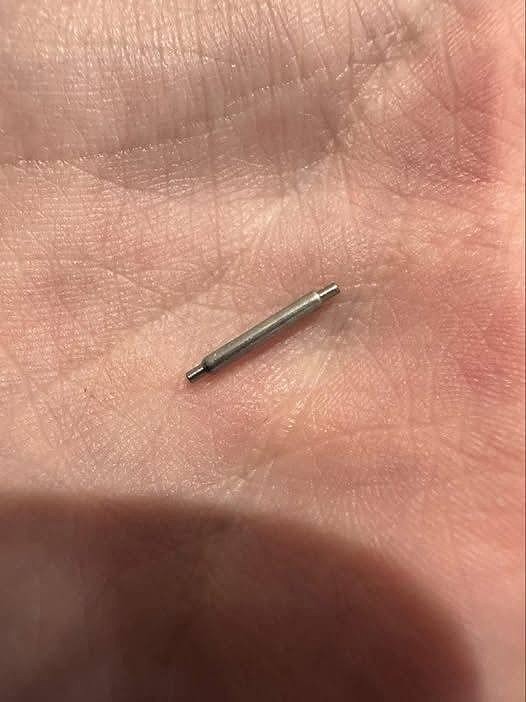
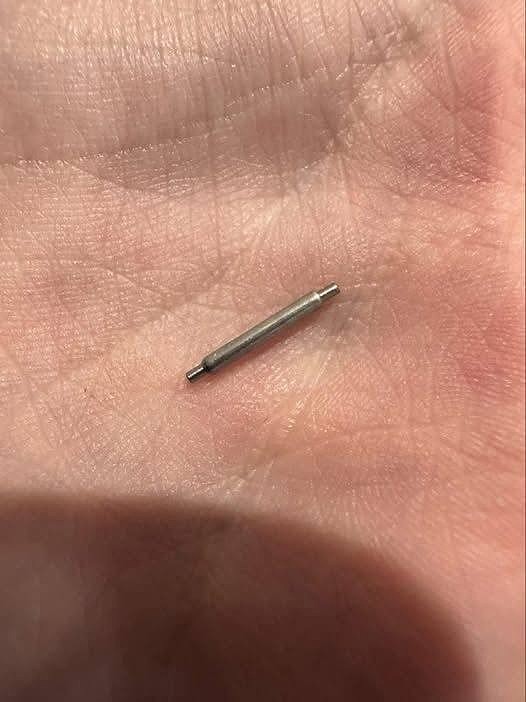

Every now and then, we come across an object so small and unassuming that it seems almost invisible to the world around it. It might be a tiny piece of metal resting on a desk, tucked inside a drawer, or discovered on the floor without any clue as to how it got there. It has no buttons, no markings, no obvious features to explain its purpose. At first glance, it appears ordinary—perhaps even insignificant. Yet the more you look at it, the more intriguing it becomes.
What is it? Where did it come from? What does it do?
Chances are, most people would not immediately recognize its purpose. And that is precisely what makes such objects fascinating. Behind even the smallest metal component lies a carefully designed function, a story of engineering, and a role within a larger system that may be far more complex than it appears.
The Beauty of Hidden Complexity
Modern design often celebrates simplicity. From consumer electronics to household tools, many products are created with clean lines and minimal surfaces. Their inner workings are concealed beneath smooth exteriors. As a result, what appears to be a random piece of metal could actually serve an essential and highly specialized purpose.
That mysterious object might be:
-
A custom-machined part from a larger mechanical assembly
-
A fastening component designed to secure moving elements
-
A connector that ensures electrical continuity
-
A structural bracket providing reinforcement
-
A precisely cut alignment pin that keeps systems calibrated
-
A grounding clip that protects sensitive circuitry
-
A locking plate that ensures safety and stability
Without context, it can be nearly impossible to determine its function. That is because many components are designed with incredible specificity. Engineers and manufacturers rely on exact measurements, tight tolerances, and carefully selected materials to ensure reliability and performance.
Even a difference of a fraction of a millimeter can determine whether a machine operates smoothly or fails entirely. That small piece of metal might be made from stainless steel for corrosion resistance, copper for conductivity, aluminum for lightweight strength, or hardened alloy for durability. Each design choice reflects thoughtful engineering decisions.
Engineering in Plain Sight
We often admire finished products—cars, smartphones, appliances, bicycles, or tools—without considering the thousands of tiny components that make them work. Inside every machine are parts that rarely receive attention but are absolutely essential.
A single pin might hold multiple sections together.
A small bracket could support significant weight.
A miniature clip might prevent electrical interference.
A metal plate might regulate motion or secure a locking system.
These parts are not decorative. They are purposeful. They are designed to solve very specific problems.
Good engineering is not always visible. In fact, the best designs often disappear into the background. They do their job quietly and efficiently without demanding recognition. That is part of their brilliance.
Precision and Purpose
Manufacturing small metal components is far from random. Modern production methods use advanced techniques such as:
-
CNC machining
-
Laser cutting
-
Precision stamping
-
Die casting
-
Injection molding for metal alloys
-
Surface finishing and heat treatment
Each step ensures that the final piece meets exact specifications. Some components must withstand extreme temperatures. Others must resist vibration, moisture, or constant friction. Some are built to carry electrical current safely, while others are designed purely for mechanical strength.
What might look like a simple shape—a bent strip, a curved plate, a threaded rod—could have required extensive prototyping, testing, and refinement before reaching its final form.
In many industries, including automotive manufacturing, aerospace, consumer electronics, construction, and medical equipment, these seemingly minor components are indispensable. Without them, larger systems would not function safely or reliably.
Why It’s Hard to Guess
The reason most people cannot immediately identify such objects is not due to a lack of intelligence. It is because specialization has become a defining feature of modern technology.
Many parts are designed for niche applications. Some are unique to a specific model of device. Others are used only within professional environments. Unless someone works directly with that equipment or has encountered the part before, guessing its purpose can feel like solving a puzzle without clues.
Context matters. A metal piece placed next to the machine it belongs to might make sense. Alone on a table, it becomes mysterious.
And that mystery sparks curiosity.
The Joy of Curiosity
When people encounter an unfamiliar object, something interesting happens. Conversations begin.
“It looks like part of a bicycle.”
“Maybe it came from a phone.”
“Could it be a tool?”
“Is it something mechanical?”
Each guess reflects imagination at work. People try to connect shapes to experiences they recognize. A curved edge might remind someone of plumbing hardware. A small hole could suggest mounting equipment. A flat plate with slots might resemble something from furniture assembly.
Even incorrect guesses are part of the fun. The process of wondering encourages observation and creative thinking.
In a world where so much information is instantly accessible, there is something refreshing about not knowing. Mystery invites engagement.
Small Parts, Big Impact
It is easy to underestimate the value of small components. However, history and modern industry show that minor details can have major consequences.
A loose fastener can compromise structural stability.
A missing clip can interrupt electrical grounding.
An improperly aligned pin can cause mechanical wear.
A damaged bracket can lead to system imbalance.
Conversely, a well-designed component can enhance safety, extend product lifespan, and improve efficiency.
This principle applies across industries. In transportation, tiny components contribute to vehicle safety. In electronics, small connectors ensure reliable data transfer. In construction, metal fasteners maintain structural integrity. In medical devices, precision parts enable life-saving equipment to operate accurately.
The size of a component does not determine its importance.
Craftsmanship in Everyday Objects
The more we pay attention to ordinary objects, the more we appreciate the craftsmanship behind them. Even simple tools often contain thoughtful design decisions.
Edges may be rounded to reduce stress points.
Surfaces may be treated to resist corrosion.
Holes may be positioned to distribute weight evenly.
Thickness may be calibrated to balance strength and flexibility.
These details reflect engineering knowledge accumulated over decades, sometimes centuries. They are the result of trial, error, innovation, and continuous improvement.
The tiny metal object in question may represent a small piece of that ongoing story.
The Invisible World of Components
Walk through your home and consider how many metal components are quietly performing tasks:
Door hinges allow smooth motion.
Cabinet brackets support weight.
Appliance screws secure internal systems.
Electrical grounding clips maintain safety.
Furniture fasteners hold frames together.
In most cases, these parts go unnoticed. They are not meant to attract attention. Their success lies in reliability.
We tend to notice components only when they fail. A squeaking hinge, a loose handle, or a misaligned drawer suddenly reminds us that small parts matter.
A Lesson in Design Philosophy
There is a broader lesson hidden within the mystery of small objects. Thoughtful design often prioritizes function over flashiness. Minimalism in appearance can conceal complexity beneath the surface.
Many modern devices follow this philosophy. Sleek designs hide intricate internal structures. Clean exteriors mask networks of circuits, connectors, and mechanical supports.
This approach encourages efficiency and durability. It reduces unnecessary clutter and focuses on performance.
The unassuming metal object becomes a symbol of this principle: simplicity outside, sophistication inside.
Why Mystery Matters
Curiosity drives innovation. When we encounter something we do not understand, we are motivated to explore. Engineers ask questions. Designers test ideas. Manufacturers refine processes.
Even outside professional fields, curiosity enriches everyday life. Wondering about how things work fosters appreciation for craftsmanship and problem-solving.
The mysterious object may never reveal its purpose immediately. Perhaps someone nearby recognizes it. Perhaps research uncovers its origin. Or perhaps it remains unidentified.
Regardless, the act of wondering is valuable.
Imagination at Work
Speculating about unknown objects encourages imagination. It allows people to think beyond surface appearances.
Could it be part of a locking mechanism?
Is it a connector within an electronic system?
Does it stabilize rotating parts?
Is it a tool designed for a specialized task?
Each possibility opens a different narrative.
And sometimes, the real answer is more surprising than any guess.
Everyday Engineering Excellence
Behind the scenes, countless professionals dedicate their careers to designing and refining components like this. Mechanical engineers, materials scientists, machinists, industrial designers, and quality assurance specialists collaborate to ensure that every piece performs as intended.
Their work requires attention to detail. It demands precision. It involves testing under stress conditions, analyzing wear patterns, and selecting materials suited for specific environments.
Although the public rarely sees these efforts directly, their impact is everywhere.
A Reminder of Interconnected Systems
Modern life depends on interconnected systems. Vehicles rely on engines, transmissions, and electronic controls. Appliances depend on wiring, motors, and support structures. Buildings rely on fasteners, brackets, and reinforcements.
Small components serve as links within these systems. Remove one, and the chain weakens.
The tiny metal object is not isolated in purpose. It likely belongs to a broader structure, playing its role quietly and effectively.
Appreciating the Overlooked
There is value in appreciating the overlooked elements of our surroundings. Doing so shifts perspective. Instead of seeing objects as ordinary, we begin to recognize the expertise behind them.
That piece of metal may not draw attention like a smartphone or vehicle does. Yet without parts like it, those larger products could not exist.
This realization encourages gratitude for craftsmanship and thoughtful design.
So… What Is It?
Perhaps you already know exactly what that small metal object is used for. Maybe you have seen one before and can identify it instantly.
Or maybe its purpose remains a mystery.
And maybe that is perfectly fine.
The true significance may not lie in the answer itself, but in the process of curiosity it inspires.
It reminds us that complexity often hides beneath simplicity. That precision lives within small details. That engineering excellence surrounds us daily—even in objects we barely notice.
The Bigger Picture
In a rapidly advancing technological world, it is easy to focus only on finished products and major innovations. Yet progress is built on foundations of small improvements and carefully crafted components.
Innovation does not always arrive in dramatic forms. Sometimes, it appears as a tiny metal piece designed to perform one task exceptionally well.
Such objects demonstrate that thoughtful design, durability, and precision matter at every scale.
Final Reflection
The next time you encounter a mysterious item—a small metal bracket, a curved plate, a narrow strip with holes—pause for a moment. Consider the possibility that it plays an essential role somewhere.
Behind its modest appearance lies intention. Behind its shape lies engineering logic. Behind its material lies deliberate choice.
Whether you discover its true purpose or not, it serves as a reminder that the world around us is filled with hidden craftsmanship.
And sometimes, the smallest pieces tell the most interesting stories.