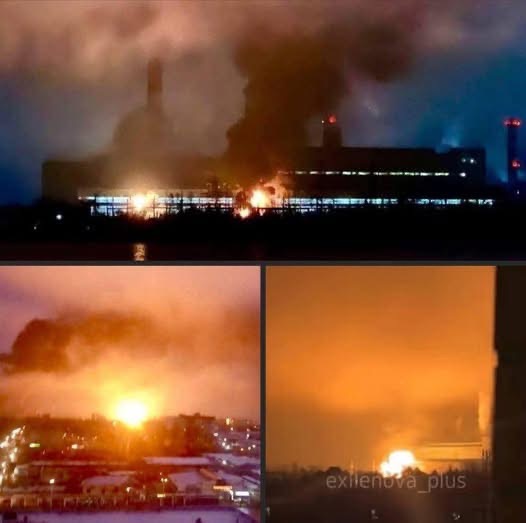

Shocking images showing massive explosions lighting up the night sky are racing across social media, triggering panic, speculation, and urgent warnings claiming that “the war begins.” Thick smoke, towering flames, and glowing orange skies have left millions of users frozen mid-scroll, wondering if the world has just crossed a terrifying new line.
The visuals are undeniably intense. Multiple frames appear to show a large industrial-scale facility engulfed in fire, with repeated blasts illuminating the horizon and smoke clouds rising high into the air. From a distance, the scene looks apocalyptic — the kind of imagery people associate with major military strikes or the opening moments of large-scale conflict.
And that’s exactly why fear spread so fast.
Within minutes of being posted, captions like “maximum worldwide alert”, “this is it”, and “the war has started” flooded comment sections. Some users claimed the explosions were proof of a coordinated attack. Others warned loved ones to prepare, stock supplies, or stay alert.
But here’s the critical part many posts leave out: There is no verified confirmation that these images mark the start of a global war.
 What could these images actually show?
Experts warn that dramatic visuals like these are often linked to:
-
Large industrial or energy-sector fires
-
Explosions at power plants, factories, or storage facilities
-
Accidents involving fuel, chemicals, or infrastructure
-
Older footage reused or reposted without context
In many past cases, similar images were later traced back to industrial accidents or isolated incidents, not military action. When stripped of location, date, and source, even a single explosion can be made to look like the beginning of something far bigger.
 Why the panic spreads so fast
Images like these tap directly into global anxiety. With ongoing conflicts, political tensions, and nonstop breaking-news culture, people are already on edge. A single word — “war” — is enough to flip a switch.
Social platforms reward shock, urgency, and fear. The more dramatic the caption, the faster it spreads — even before facts are checked.
 What we know right now
-
No official global emergency declaration has been confirmed
-
No verified statements confirm a worldwide military escalation
-
Details such as location, time, and cause remain unclear
Until authorities or reliable news sources release confirmed information, claims of “the war begins” remain unverified and speculative.
 Why caution matters
False or exaggerated alerts can cause real harm — panic buying, fear-driven decisions, and emotional distress. That’s why experts urge people to pause, verify, and avoid spreading unconfirmed claims, no matter how dramatic the images appear.
 Bottom line
The images are real.
The fire and explosions are serious.
But a global war has NOT been confirmed.
In moments like this, fear moves faster than facts. Staying calm, informed, and critical is more important than ever — because sometimes the most dangerous thing isn’t what’s happening in the image… but what people believe it means.
As more verified information emerges, the full truth will become clearer. Until then, the world watches — cautiously.