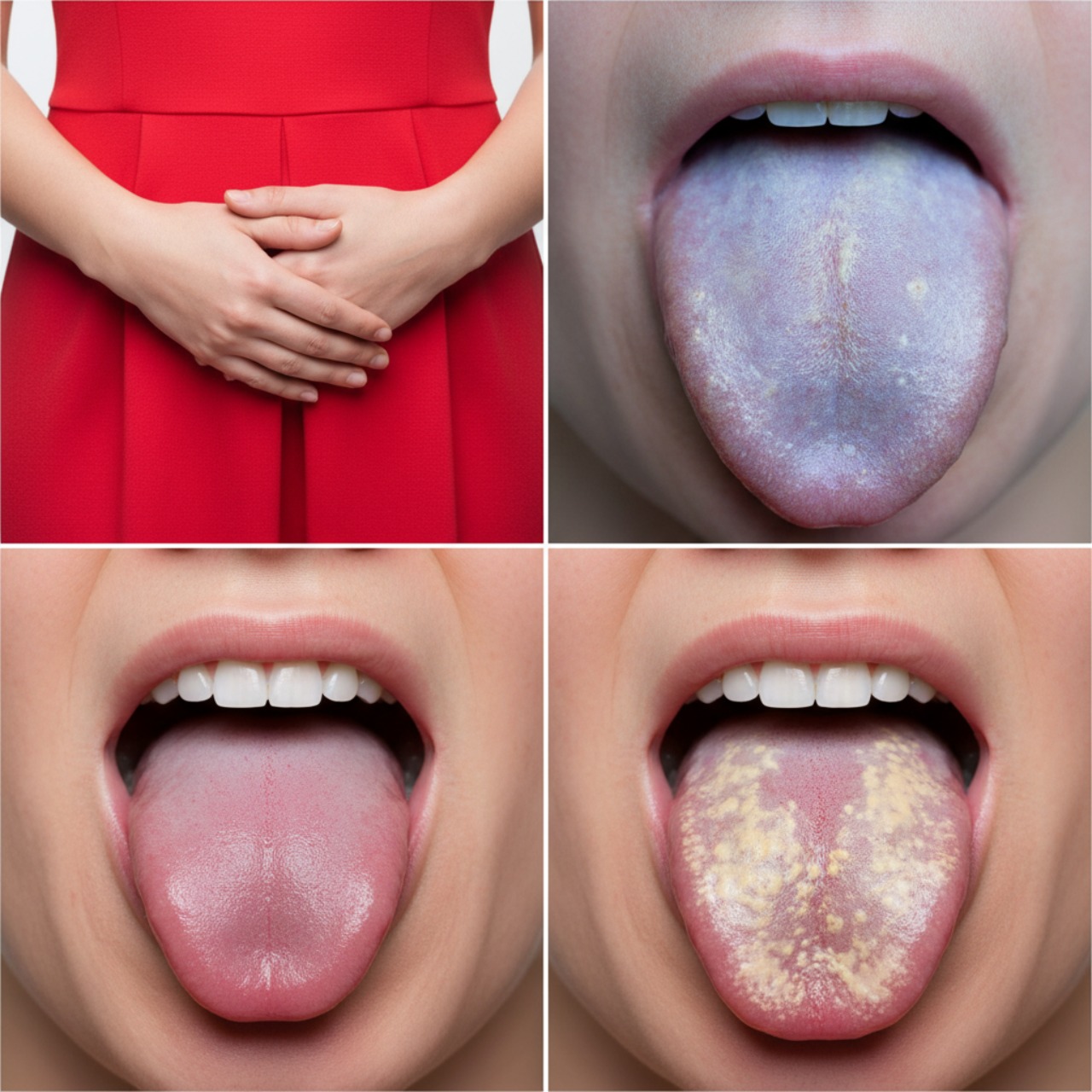


It is always there, quietly resting in your mouth, yet most people rarely give it a second thought. Your tongue, however, can reveal a surprising amount about what is happening inside your body. A change in color, an unusual texture, a burning sensation, or a persistent coating may seem minor, but these signs are often silent messages that something is out of balance. Taking a quick look in the mirror can sometimes provide valuable insight into your overall health.
One of the most common and easily overlooked symptoms is a white coating on the tongue. Many people notice it when brushing their teeth in the morning, along with a strange taste or bad breath. In many cases, this may be linked to a yeast overgrowth in the mouth. The mouth naturally contains small amounts of yeast, but when conditions become favorable, this yeast can multiply and create visible symptoms.
Several factors can contribute to this imbalance. Poor oral hygiene allows bacteria and yeast to thrive. Recent antibiotic use may disrupt the natural balance of microorganisms. A weakened immune system, high stress levels, dehydration, or chronic dry mouth can also create the perfect environment for yeast to grow. Diet plays an important role as well, especially one high in sugar and refined carbohydrates, which feed yeast and promote its spread.
Fortunately, there are simple daily habits that can help restore balance. Gently cleaning your tongue twice a day with a soft brush or tongue scraper helps remove buildup. Rinsing with a mild saline solution or a baking soda mixture can create an environment that discourages yeast growth. Reducing sugary and fermented foods deprives the yeast of fuel, while adding probiotic rich foods such as yogurt and fermented drinks supports healthy bacteria. If the white coating remains thick, painful, or persistent despite these measures, a visit to the dentist or doctor is strongly recommended.
In some cases, a persistent white tongue may be connected to a deeper imbalance affecting other parts of the body. Yeast infections are not limited to one location. A white tongue accompanied by tingling, burning, or a metallic taste can sometimes appear alongside vaginal yeast infections. The common factor is Candida albicans, a yeast that naturally lives in the body but can multiply excessively when the internal environment is disrupted.
This often reflects a global imbalance of the body’s natural flora. Antibiotic use, chronic stress, a diet high in sugar, hormonal changes, and weakened immunity can allow yeast to flourish in multiple areas at the same time. Because these imbalances involve the digestive, oral, and vaginal systems, symptoms may appear simultaneously and reinforce each other.
Pay attention to warning signs that occur together. Oral symptoms such as white coating, soreness, or burning may appear along with vaginal itching, unusual discharge, or redness. Supporting your body through balanced nutrition is essential. Focus on whole foods, fiber, and probiotics while reducing sugar and highly processed foods. Hydration and adequate sleep also strengthen immune function and help restore balance.
Most importantly, consult a healthcare professional if symptoms persist or worsen. Antifungal treatments, whether local or systemic, may be needed. Avoid self medicating, as some fungal symptoms can resemble other conditions that require different treatment. Your tongue is more than just a tool for taste. It is a visible reflection of your internal health. Listening to what it shows you today can help prevent more serious problems tomorrow.